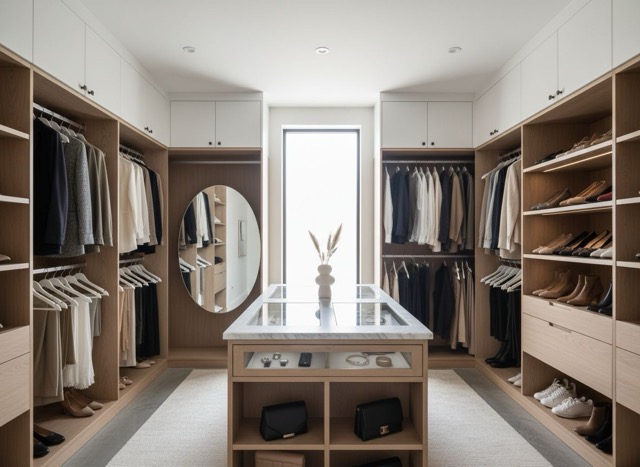
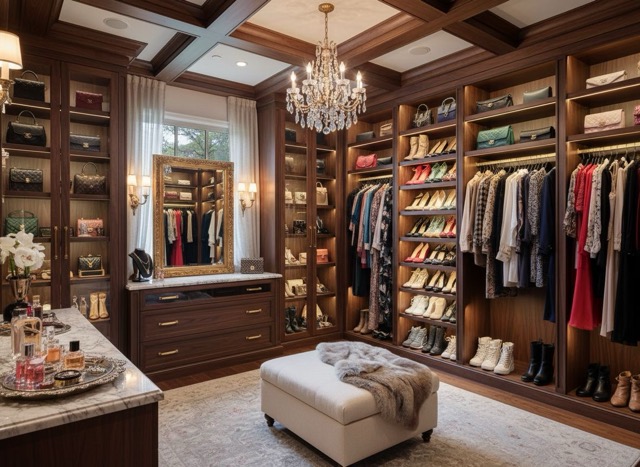
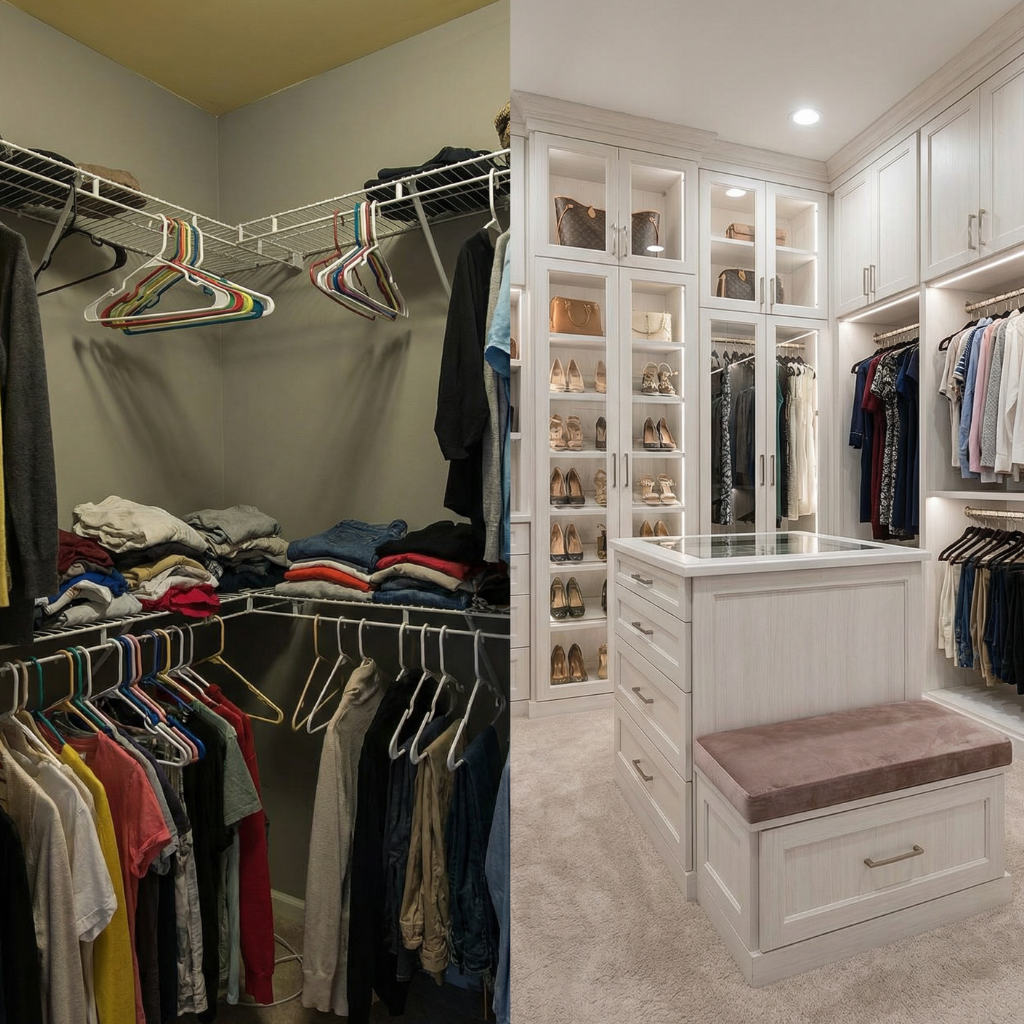
Contemporary means current, so it moves. Right now that is fluted and reeded panels, softened corners instead of sharp ones, two metals used on purpose, and color on the cabinetry instead of on the walls. In five years it will mean something else, which is worth knowing before you commit to millwork.
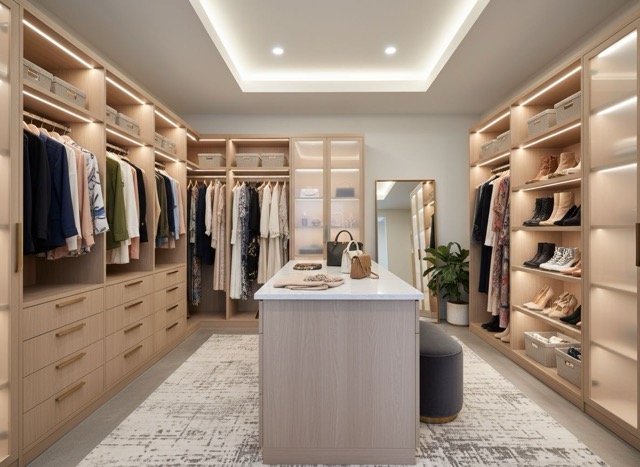
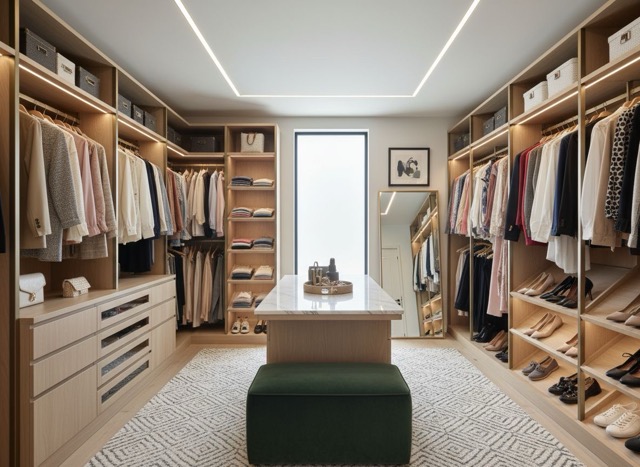
| Surface | Use | Note |
|---|---|---|
| Cabinets | Olive, oxblood, deep teal or clay | Color goes on the cabinets, not the walls |
| Walls | Warm off-white | Lets the cabinet color carry the room |
| Metal | Brass plus matte black | Two, chosen. Three is an accident |
| Texture | Fluted wood, boucle, travertine | One texture per surface |
| Element | Specification |
|---|---|
| Fronts | Fluted MDF or applied dowel reeding, sprayed |
| Edges | 3-6 mm radius, or a full bullnose |
| Rods | Brass round rod, black end caps |
| Lighting | Backlit mirror plus 3000K shelf LED |
| Surfaces | Travertine or microcement counter |
Fluting adds roughly 25 to 40 percent over a flat front, because it is a machined surface that then has to be sprayed.
Ranges are typical US installed prices and vary by market. Compare them against the full closet remodel cost breakdown.
In the app, use Transform Closet with a photo of your room and pick Contemporary. If you are starting from nothing, use Dream Closet and paste this description:
“Contemporary closet, fluted olive green cabinet fronts, rounded edges and arched opening, brass and matte black hardware, backlit mirror, travertine counter, warm LED”
Yes, the same way shiplap did. It is a surface treatment, so it dates faster than a layout does. Put fluting on doors and fronts that can be swapped, not on the carcass.
Assign them roles. One metal for everything you touch (pulls, rods), the other for everything structural (frames, brackets, legs). The rule has to hold across the whole run or it just reads as mismatched.