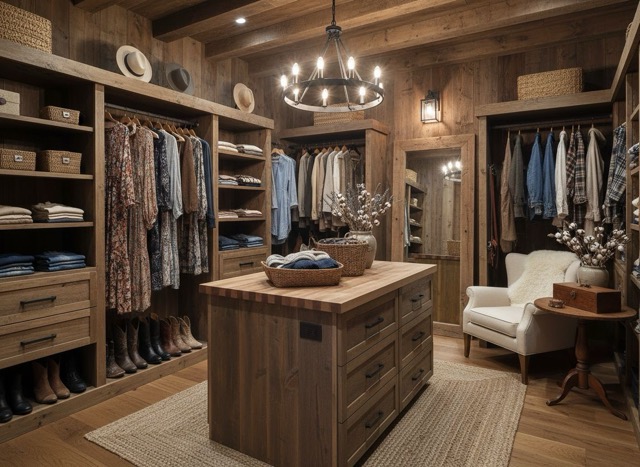
Rustic is about visible material: thick solid timber with the saw marks and knots left in, black iron that looks forged rather than machined, and joinery you can see. It is the opposite of the flat-panel styles, where the goal is that no one can tell how the thing was made.
| Surface | Use | Note |
|---|---|---|
| Wood | Reclaimed oak, knotty pine, cedar | Oiled or waxed, not lacquered |
| Metal | Black wrought iron | Hammered texture beats smooth powder coat |
| Walls | Warm white, or shiplap | Plain, so the timber carries it |
| Textiles | Wool, burlap, leather | Baskets and bin fronts |
| Element | Specification |
|---|---|
| Shelves | Solid timber, 1-1/2 to 2 in., oiled |
| Brackets | Wrought iron, lag-bolted into studs |
| Rods | Iron pipe or a peeled branch on iron cradles |
| Door | Barn door on an exposed 6-8 ft track |
| Lighting | 2200-2700K, edison bulbs or a lantern fixture |
Reclaimed timber is the wildcard. Salvaged local stock can be nearly free; specified reclaimed oak runs more than new hardwood.
Ranges are typical US installed prices and vary by market. Compare them against the full closet remodel cost breakdown.
In the app, use Transform Closet with a photo of your room and pick Rustic. If you are starting from nothing, use Dream Closet and paste this description:
“Rustic closet, thick rough-sawn oak shelves on black wrought iron brackets, sliding barn door on exposed track, iron pipe hanging rod, woven baskets, warm edison lighting”
It solves a real problem: a swinging door needs 30 inches of floor clearance, a sliding one needs none. The catch is that it never seals, so it is a poor choice for a cedar closet or anywhere you care about dust.
Cedar lining is a functional choice, not a style, but it fits rustic naturally because the material is left visible. Line the back and sides in aromatic cedar and leave it unfinished, since any sealer kills the smell that made you buy it.