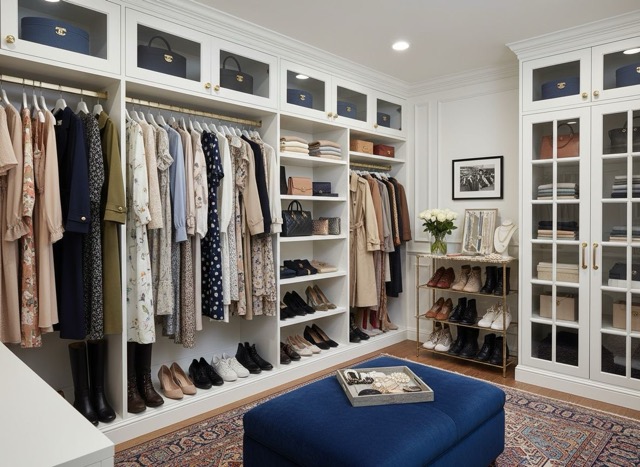
Classic is the style that matches an older house instead of fighting it. Shaker or raised-panel fronts, painted rather than stained, crown molding where the cabinetry meets the ceiling, and a baseboard that continues the room's. It ages slowly, which is the point.
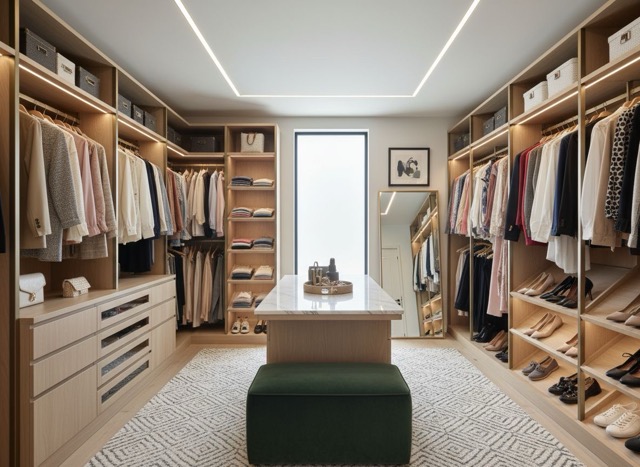
| Surface | Use | Note |
|---|---|---|
| Cabinets | Off-white, sage, soft blue-grey | Paint, not stain |
| Walls | One shade lighter than the cabinets | Tonal, not contrasting |
| Metal | Polished nickel or aged brass | Knobs on doors, cup pulls on drawers |
| Floor | Hardwood or a patterned runner | Matches the rest of the house |
| Element | Specification |
|---|---|
| Fronts | MDF shaker, sprayed satin enamel |
| Molding | Crown at ceiling, plinth at floor |
| Rods | Round metal rod in matching finish |
| Lighting | Ceiling fixture plus discreet shelf LED |
| Back | Beadboard panel behind open shelving |
The molding and the sprayed paint finish are what push classic above modern on price. The boxes underneath are the same.
Ranges are typical US installed prices and vary by market. Compare them against the full closet remodel cost breakdown.
In the app, use Transform Closet with a photo of your room and pick Classic. If you are starting from nothing, use Dream Closet and paste this description:
“Classic closet design, off-white shaker cabinet fronts, crown molding at the ceiling, polished nickel cup pulls, beadboard back panel, hardwood floor, warm ceiling light”
Shaker is flatter, cheaper to spray, and reads correctly in almost any house built after 1900. Raised panel is more formal and only makes sense if the doors in the rest of the house are also raised panel.
It should. The crown molding closing the gap is the detail that makes the run read as millwork instead of furniture. A 10 in. dead gap above the cabinets undoes the style and collects dust.