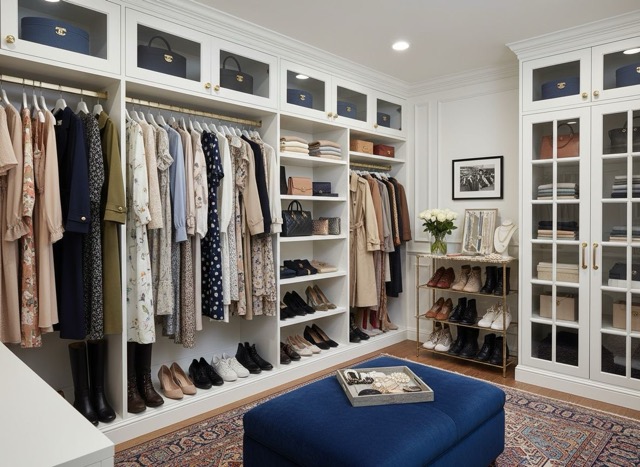
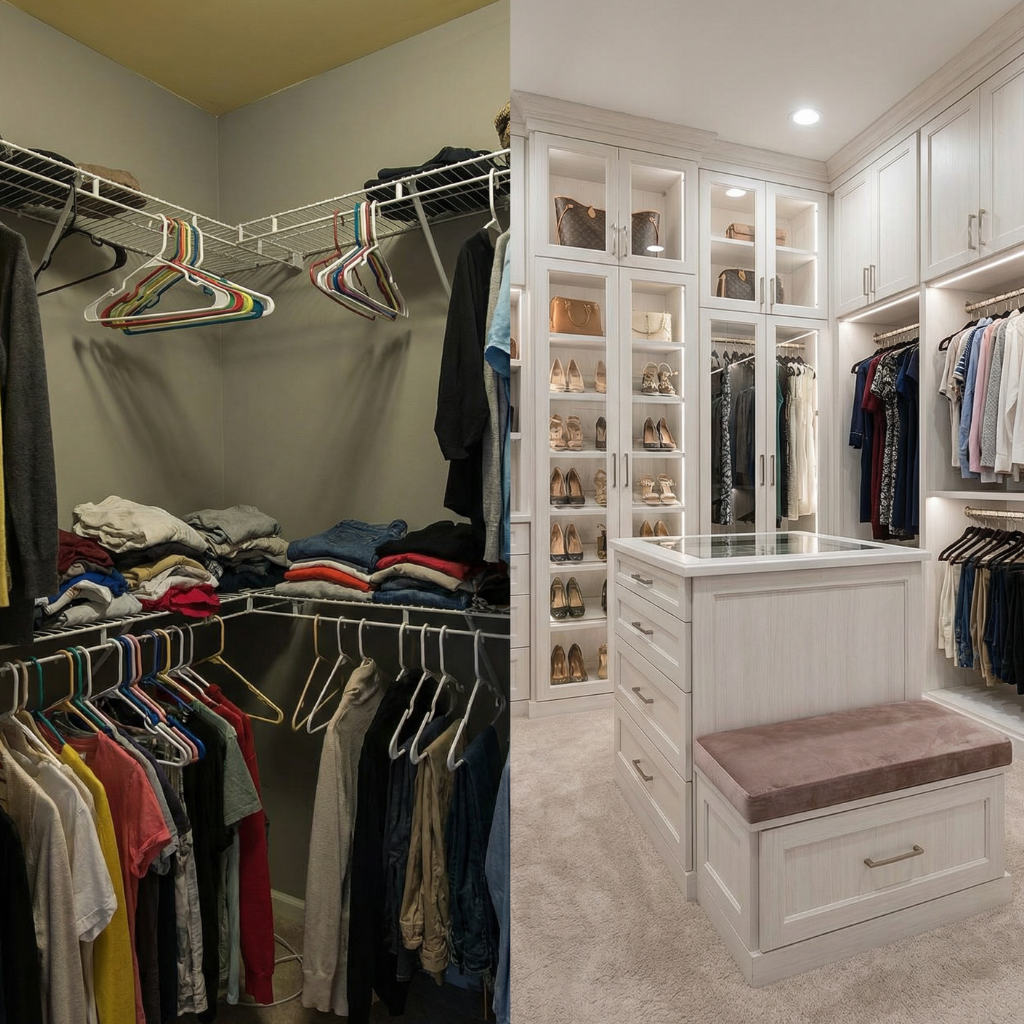
Pantry shelving obeys one rule: you should be able to see every item without moving another one. That puts the ceiling on depth at about 16 inches for canned goods, because a can is 3 inches across and four deep is already one too many. Deep pantry shelves are how households end up with three open bottles of the same thing.
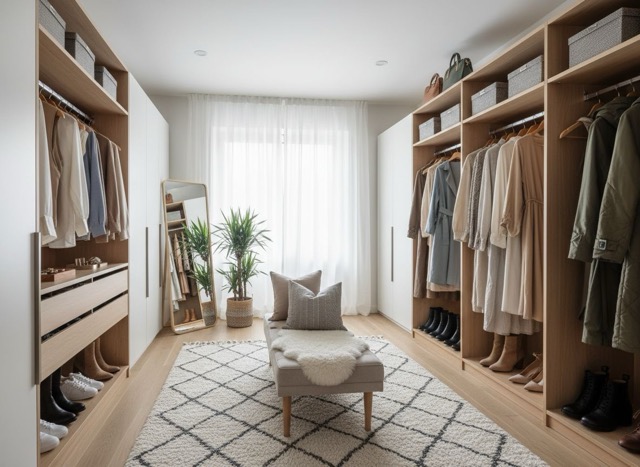
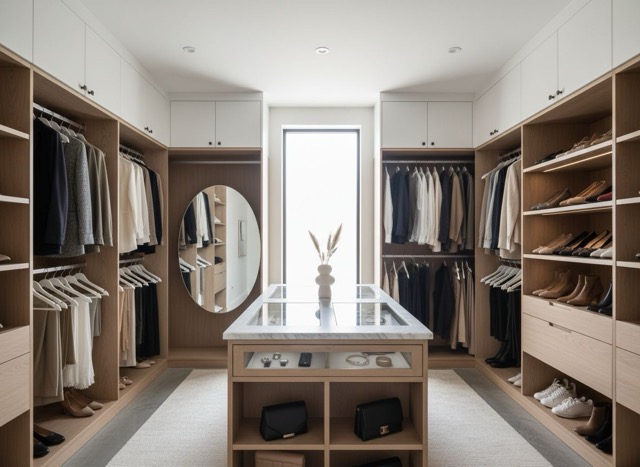
These are the numbers the app's planner uses when it lays out a pantry closet.
| Measurement | Value | Why it matters |
|---|---|---|
| Shelf depth, cans and jars | 12 - 14 in. | Holds 4 cans deep, still visible from the front |
| Shelf depth, boxes and bulk | 16 - 18 in. | Cereal boxes are 12 in. tall by 8 in. wide |
| Max useful depth | 18 in. | Past this, switch to a pull-out drawer or you lose the back |
| Shelf spacing, cans | 8 - 10 in. | More shelves, less air. A can is 4.5 in. tall |
| Shelf spacing, boxes | 14 - 16 in. | One or two bays only |
| Shelf spacing, appliances | 18 - 24 in. | Bottom bay: mixer, air fryer, slow cooker |
| Door storage depth | 4 in. | Spices and packets, if the door swings clear of the shelves |
Not every style fits every space. These three do, and each page has the material list and the cost per linear foot.
Photograph the space, choose Pantry Closet as the closet type, and pick a style. To generate one from scratch instead, paste this into Dream Closet:
“Pantry closet, shallow 13 inch shelves with tight spacing for cans at eye level, deep pull-out drawers at the bottom, door-mounted spice racks, bright LED lighting, labeled containers”
12 to 16 inches for most food. Deeper than 18 inches and you cannot see the back row, which is the failure mode of nearly every builder-grade pantry. If the closet is framed deeper, use pull-out drawers so the back comes to you.
Fixed above eye level, because you can already see everything. Pull-out below waist height, where you would otherwise be crouching and reaching. Pull-outs cost roughly three times a fixed shelf, so buy them only where they earn it.
Vary it deliberately: 8 to 10 inches for canned goods, 14 to 16 for cereal and pasta boxes, and one 20 inch bay at the bottom for small appliances. Uniform spacing wastes about a quarter of the volume.